

Becoming Orthodox

The Church: Procedures for Becoming a Member of the Orthodox Christian Church
The life of the Orthodox Church perpetuates and fulfills the ministry of Jesus Christ. The close association between Christ and His Church is reflected in the images from the Scriptures which declare that Christ is the Head and the Church is His Body, and that Christ is the Bridegroom and the Church is His bride. These images express the reality that the Church does not exist independently from Christ.
The Lord and Savior, who was known, loved, and followed by the first disciples in Galilee nearly two thousand years ago, is the same Lord and Savior who is known, loved, and followed through His Church. As Christ revealed the Holy Trinity, His Church continues to reveal the Holy Trinity and to praise God in her worship. As Christ reconciled humanity to the Father, His Church continues to be the medium of reconciliation by word and action throughout the world. As Christ manifested the vocation of authentic human life, His Church continues to be the realm through which the image and likeness of God in each of us is brought to perfection.
The Orthodox Christian becomes united with Christ at Baptism and is nurtured by Christ at every Eucharist. We believe that the Holy Spirit acts in and through the Church to make Christ our Lord and to bring His work to fulfillment.
Orthodoxy has avoided any temptation to reduce its vision of the Church. The biblical descriptions of the Church as the Body of Christ and the Temple of the Holy Spirit indicate that she truly must be recognized as much more than one institution among many, or a social service agency, or as an ethnic or fraternal organization. Certainly the Church does have her institutional aspects, and she is always subject to the sins and limitations of her human members.
Yet, Orthodoxy believes that in addition to her obvious human side, the Church also has a Divine dimension. The Greek word for Church, ecclesia, implies a community called and gathered by God for a special purpose. This means that the Church can be described as the unique meeting place between God and His people.
Personal Experience
The Orthodox Faith cannot be appreciated fully, or appropriated personally, by the individual who is outside the Orthodox Church. Viewed from this vantage point, Orthodoxy can falsely appear as one world-view among many, as a cultural appendage, or merely as a ceremonial church. It is only from within the Church that one has the necessary perspective of experiencing Orthodoxy as the revelation of Divine Life.
Becoming an Orthodox Christian
The Orthodox Church has a universal appeal and vocation. She does not restrict membership to people of any particular culture, race, class, or section of the world. Indeed, Orthodoxy values the diversity of cultures, peoples, and languages which are part of her life. She also affirms a unity of faith and love in Christ which transcends all artificial barriers. Membership in the Orthodox Church is open to all persons.
The Orthodox Church in the United States is no longer considered to be an immigrant Church. She has been recognized as one of the four major faiths in America. The membership of the Orthodox Church in this country includes persons from a wide variety of ethnic and cultural family backgrounds. The overwhelming majority have been born in the United States. Among these five million Orthodox, there are a large number of persons who were raised in other religious traditions and who have chosen to become members of the Orthodox Church.
This reality was clearly recognized by His Eminence Archbishop Iakovos, former archbishop of North and South America, when he told the Twentieth Biennial Clergy/Laity Congress of the Greek Orthodox Archdiocese that:
“Orthodoxy is not exclusively the religion of the Hellenes, but the religion of all those who, as a result of mixed marriages, or contract or study of Orthodoxy, have come to know and relate to it; and, therefore, Orthodoxy has already found its place and mission in the Western Hemisphere.”
If you are seriously interested in becoming a member of the Orthodox Church, you should meet with your local Orthodox priest and become acquainted with his parish. He will be happy to offer you advice and guidance, as well as to introduce you to members of the parish. This is truly an exciting period in the development of Orthodox parishes in the United States. While most are associated with a particular cultural heritage, many are coming to fully recognize the responsibility of Orthodoxy to the wider society.
When you embrace the Orthodox Church, you also join a particular local parish. It is meant to be a spiritual family. Therefore, you should thoughtfully examine the concerns and priorities of the parish. Try to discover whether you will feel comfortable, whether the parish can provide you with the opportunity to grow closer to God and to be of responsible service to others.
In many parishes, the priest offers classes or individual conferences on the Orthodox Faith for those who wish to become members of the Orthodox Church. The length and scope of these instructions will be determined by your previous knowledge of the Christian Faith, as well as by your particular needs and concerns.
After the period of instruction, there is a Service of Reception into the Church. If you are converting from a non-Christian religion, you will make a profession of Faith and be baptized and chrismated. If you are being received from a Church which has a similarity of beliefs with Orthodoxy and you have been properly baptized and confirmed, you will participate in a brief Service of Anointing (Chrismation) which signifies reconciliation with the Orthodox Church. The reception of Holy Communion is always seen as the consummation of union with the Church.
Commitment to Christ
The ultimate commitment of the Orthodox Christian is a commitment to Christ our Lord, Who is known in and through the Church. This is expressed by the litanies of the Church which call upon us to “commit ourselves, one another, and our whole life unto Christ our God.” And, prior to receiving Holy Communion, we pray: “O Master Who loves mankind, unto you we commit our whole life and our hope.”
Each of us is unique and blessed by the Holy Spirit with different gifts and vocations in life; therefore, our personal commitments to Christ will be expressed differently. Yet, Orthodoxy firmly believes that this commitment will always be built upon a worship of God and a loving concern for others. As worship is central to the Church as a whole, worship, personal prayer, and especially participation in the Holy Eucharist are central to the life of the individual Orthodox Christian.
Through these actions, we grow closer to God and we are blessed with the fruits of the Spirit, which enable us to be of loving and responsible service to others in Christ’s Name. Orthodoxy avoids any tendency which seeks to separate love of God from love of neighbor. The two are inseparable. This conviction is expressed during the Divine Liturgy in the dialogue between the priest and the people which says, “Let us love one another that with one mind we may confess…The Father, Son, and Holy Spirit; The Trinity, consubstantial and undivided.”
Although Orthodoxy highly extols the value of worship, this does not imply that it in any way minimizes the importance of a life lived according to the Gospel. Therefore, as the Liturgy reminds us, only those with faith and love may draw near to receive Holy Communion. Our participation in the Body and Blood of the Lord also provides each with the opportunity to be Christ-bearers in the world in which we live.
Source: Greek Orthodox Archdiocese of America, http://www.goarch.org/ourfaith/ourfaith7052.

Lia Forakis leads the Greek Orthodox Youth Association - GOYA - ministry and helps support our other youth and young adult ministries. Lia grew up in Modesto, California, and was a member of the Annunciation parish. She attended Modesto Junior College and Long Beach City College. Lia has served the church as a Greek dance teacher at Saint George Greek Orthodox Church in Fresno; as a youth director at the Annunciation Greek Orthodox Church in Sacramento, California; and as a San Francisco Metropolis camp counselor at St. Nicholas Ranch for many years. In her spare time, she enjoys Greek dancing and playing music, and finding cool places to eat with friends.

Renée established our strategic communications plan for the parish. She manages our website and social media channels, and previously designed and produced the Resurrection monthly magazine. Renée has years of experience leading strategic communications and employee engagement for large companies. She holds a Bachelor of Science degree in Business Management from the University of Phoenix. Renée lives in San Ramon with her husband, Brad, and in her spare time, enjoys caring for her grandson, Eddie, entertaining, and rooting for the San Francisco Giants.

Roberto Jaquez is the parish "go-to person" for all operational needs. He has worked for the parish for over 20 years and became our facilities manager in 2018. Roberto loves his job and the parish. He can be found at the church almost all hours of the day and night, while also being the primary caretaker for his father. Roberto was born in Mexico and came to the United States in 1989, where he attended Laney College in Oakland, CA. In his spare time, he enjoys spending time with his big, loving family, going on long hikes, and to the movies. He's a big fan of the Dallas Cowboys, dogs, and Ron Burgundy.

Father Niko was born in Seattle, Washington and was baptized at the Church of the Annunciation in Amaliada, Greece. After graduating from the University of Washington with a Bachelor’s degree in History, he enrolled at Holy Cross Greek Orthodox School of Theology in Brookline, Massachusetts, having felt a calling from the Lord to become a priest. He finished his studies in 2008, graduating with a Master of Divinity. Upon completing his studies, he served as the Youth Director of the Metropolis of San Francisco for three years while also serving at the Greek Orthodox Cathedral of the Annunciation in San Francisco. He was ordained to the Holy Diaconate on December 14, 2008, at his home parish and was ordained to the Holy Priesthood on August 15, 2011 at the Annunciation Cathedral, after which he began serving at the Cathedral as the full-time associate pastor.

Archdeacon Justin was ordained to the Holy Diaconate by His Eminence Metropolitan Gerasimos on Sunday, April 18, 2021. He was elevated to Archdeacon on Sunday, December 24, 2023. He is a 2020 graduate of Deaconate program at Holy Cross Greek Orthodox School of Theology. Archdeacon Justin is currently the Second Vice President of the Board of Directors for Saint Nicholas Ranch and Retreat Center. He also assists the Metropolis with various legal matters. Archdeacon Justin graduated from the University of San Francisco School of Law, and is a former partner in a law firm in Oakland, CA. In addition, he earned a post-graduate Certificate from the Institute for Orthodox Christian Studies in Cambridge, UK and holds a Bachelor of Arts degree in Philosophy from Franciscan University of Steubenville. He is currently studying toward a Master of Theology from the University of Balamand.
Becoming Orthodox
Lia Forakis leads the Greek Orthodox Youth Association - GOYA - ministry and helps support our other youth and young adult ministries. Lia grew up in Modesto, California, and was a member of the Annunciation parish. She attended Modesto Junior College and Long Beach City College. Lia has served the church as a Greek dance teacher at Saint George Greek Orthodox Church in Fresno; as a youth director at the Annunciation Greek Orthodox Church in Sacramento, California; and as a San Francisco Metropolis camp counselor at St. Nicholas Ranch for many years. In her spare time, she enjoys Greek dancing and playing music, and finding cool places to eat with friends.
Renée established our strategic communications plan for the parish. She manages our website and social media channels, and previously designed and produced the Resurrection monthly magazine. Renée has years of experience leading strategic communications and employee engagement for large companies. She holds a Bachelor of Science degree in Business Management from the University of Phoenix. Renée lives in San Ramon with her husband, Brad, and in her spare time, enjoys caring for her grandson, Eddie, entertaining, and rooting for the San Francisco Giants.
Roberto Jaquez is the parish "go-to person" for all operational needs. He has worked for the parish for over 20 years and became our facilities manager in 2018. Roberto loves his job and the parish. He can be found at the church almost all hours of the day and night, while also being the primary caretaker for his father. Roberto was born in Mexico and came to the United States in 1989, where he attended Laney College in Oakland, CA. In his spare time, he enjoys spending time with his big, loving family, going on long hikes, and to the movies. He's a big fan of the Dallas Cowboys, dogs, and Ron Burgundy.
Father Niko was born in Seattle, Washington and was baptized at the Church of the Annunciation in Amaliada, Greece. After graduating from the University of Washington with a Bachelor’s degree in History, he enrolled at Holy Cross Greek Orthodox School of Theology in Brookline, Massachusetts, having felt a calling from the Lord to become a priest. He finished his studies in 2008, graduating with a Master of Divinity. Upon completing his studies, he served as the Youth Director of the Metropolis of San Francisco for three years while also serving at the Greek Orthodox Cathedral of the Annunciation in San Francisco. He was ordained to the Holy Diaconate on December 14, 2008, at his home parish and was ordained to the Holy Priesthood on August 15, 2011 at the Annunciation Cathedral, after which he began serving at the Cathedral as the full-time associate pastor.
Archdeacon Justin was ordained to the Holy Diaconate by His Eminence Metropolitan Gerasimos on Sunday, April 18, 2021. He was elevated to Archdeacon on Sunday, December 24, 2023. He is a 2020 graduate of Deaconate program at Holy Cross Greek Orthodox School of Theology. Archdeacon Justin is currently the Second Vice President of the Board of Directors for Saint Nicholas Ranch and Retreat Center. He also assists the Metropolis with various legal matters. Archdeacon Justin graduated from the University of San Francisco School of Law, and is a former partner in a law firm in Oakland, CA. In addition, he earned a post-graduate Certificate from the Institute for Orthodox Christian Studies in Cambridge, UK and holds a Bachelor of Arts degree in Philosophy from Franciscan University of Steubenville. He is currently studying toward a Master of Theology from the University of Balamand.
The Church: Procedures for Becoming a Member of the Orthodox Christian Church
The life of the Orthodox Church perpetuates and fulfills the ministry of Jesus Christ. The close association between Christ and His Church is reflected in the images from the Scriptures which declare that Christ is the Head and the Church is His Body, and that Christ is the Bridegroom and the Church is His bride. These images express the reality that the Church does not exist independently from Christ.
The Lord and Savior, who was known, loved, and followed by the first disciples in Galilee nearly two thousand years ago, is the same Lord and Savior who is known, loved, and followed through His Church. As Christ revealed the Holy Trinity, His Church continues to reveal the Holy Trinity and to praise God in her worship. As Christ reconciled humanity to the Father, His Church continues to be the medium of reconciliation by word and action throughout the world. As Christ manifested the vocation of authentic human life, His Church continues to be the realm through which the image and likeness of God in each of us is brought to perfection.
The Orthodox Christian becomes united with Christ at Baptism and is nurtured by Christ at every Eucharist. We believe that the Holy Spirit acts in and through the Church to make Christ our Lord and to bring His work to fulfillment.
Orthodoxy has avoided any temptation to reduce its vision of the Church. The biblical descriptions of the Church as the Body of Christ and the Temple of the Holy Spirit indicate that she truly must be recognized as much more than one institution among many, or a social service agency, or as an ethnic or fraternal organization. Certainly the Church does have her institutional aspects, and she is always subject to the sins and limitations of her human members.
Yet, Orthodoxy believes that in addition to her obvious human side, the Church also has a Divine dimension. The Greek word for Church, ecclesia, implies a community called and gathered by God for a special purpose. This means that the Church can be described as the unique meeting place between God and His people.
Personal Experience
The Orthodox Faith cannot be appreciated fully, or appropriated personally, by the individual who is outside the Orthodox Church. Viewed from this vantage point, Orthodoxy can falsely appear as one world-view among many, as a cultural appendage, or merely as a ceremonial church. It is only from within the Church that one has the necessary perspective of experiencing Orthodoxy as the revelation of Divine Life.
Becoming an Orthodox Christian
The Orthodox Church has a universal appeal and vocation. She does not restrict membership to people of any particular culture, race, class, or section of the world. Indeed, Orthodoxy values the diversity of cultures, peoples, and languages which are part of her life. She also affirms a unity of faith and love in Christ which transcends all artificial barriers. Membership in the Orthodox Church is open to all persons.
The Orthodox Church in the United States is no longer considered to be an immigrant Church. She has been recognized as one of the four major faiths in America. The membership of the Orthodox Church in this country includes persons from a wide variety of ethnic and cultural family backgrounds. The overwhelming majority have been born in the United States. Among these five million Orthodox, there are a large number of persons who were raised in other religious traditions and who have chosen to become members of the Orthodox Church.
This reality was clearly recognized by His Eminence Archbishop Iakovos, former archbishop of North and South America, when he told the Twentieth Biennial Clergy/Laity Congress of the Greek Orthodox Archdiocese that:
“Orthodoxy is not exclusively the religion of the Hellenes, but the religion of all those who, as a result of mixed marriages, or contract or study of Orthodoxy, have come to know and relate to it; and, therefore, Orthodoxy has already found its place and mission in the Western Hemisphere.”
If you are seriously interested in becoming a member of the Orthodox Church, you should meet with your local Orthodox priest and become acquainted with his parish. He will be happy to offer you advice and guidance, as well as to introduce you to members of the parish. This is truly an exciting period in the development of Orthodox parishes in the United States. While most are associated with a particular cultural heritage, many are coming to fully recognize the responsibility of Orthodoxy to the wider society.
When you embrace the Orthodox Church, you also join a particular local parish. It is meant to be a spiritual family. Therefore, you should thoughtfully examine the concerns and priorities of the parish. Try to discover whether you will feel comfortable, whether the parish can provide you with the opportunity to grow closer to God and to be of responsible service to others.
In many parishes, the priest offers classes or individual conferences on the Orthodox Faith for those who wish to become members of the Orthodox Church. The length and scope of these instructions will be determined by your previous knowledge of the Christian Faith, as well as by your particular needs and concerns.
After the period of instruction, there is a Service of Reception into the Church. If you are converting from a non-Christian religion, you will make a profession of Faith and be baptized and chrismated. If you are being received from a Church which has a similarity of beliefs with Orthodoxy and you have been properly baptized and confirmed, you will participate in a brief Service of Anointing (Chrismation) which signifies reconciliation with the Orthodox Church. The reception of Holy Communion is always seen as the consummation of union with the Church.
Commitment to Christ
The ultimate commitment of the Orthodox Christian is a commitment to Christ our Lord, Who is known in and through the Church. This is expressed by the litanies of the Church which call upon us to “commit ourselves, one another, and our whole life unto Christ our God.” And, prior to receiving Holy Communion, we pray: “O Master Who loves mankind, unto you we commit our whole life and our hope.”
Each of us is unique and blessed by the Holy Spirit with different gifts and vocations in life; therefore, our personal commitments to Christ will be expressed differently. Yet, Orthodoxy firmly believes that this commitment will always be built upon a worship of God and a loving concern for others. As worship is central to the Church as a whole, worship, personal prayer, and especially participation in the Holy Eucharist are central to the life of the individual Orthodox Christian.
Through these actions, we grow closer to God and we are blessed with the fruits of the Spirit, which enable us to be of loving and responsible service to others in Christ’s Name. Orthodoxy avoids any tendency which seeks to separate love of God from love of neighbor. The two are inseparable. This conviction is expressed during the Divine Liturgy in the dialogue between the priest and the people which says, “Let us love one another that with one mind we may confess…The Father, Son, and Holy Spirit; The Trinity, consubstantial and undivided.”
Although Orthodoxy highly extols the value of worship, this does not imply that it in any way minimizes the importance of a life lived according to the Gospel. Therefore, as the Liturgy reminds us, only those with faith and love may draw near to receive Holy Communion. Our participation in the Body and Blood of the Lord also provides each with the opportunity to be Christ-bearers in the world in which we live.
Source: Greek Orthodox Archdiocese of America, http://www.goarch.org/ourfaith/ourfaith7052.
Becoming Orthodox
Lia Forakis leads the Greek Orthodox Youth Association - GOYA - ministry and helps support our other youth and young adult ministries. Lia grew up in Modesto, California, and was a member of the Annunciation parish. She attended Modesto Junior College and Long Beach City College. Lia has served the church as a Greek dance teacher at Saint George Greek Orthodox Church in Fresno; as a youth director at the Annunciation Greek Orthodox Church in Sacramento, California; and as a San Francisco Metropolis camp counselor at St. Nicholas Ranch for many years. In her spare time, she enjoys Greek dancing and playing music, and finding cool places to eat with friends.
Renée established our strategic communications plan for the parish. She manages our website and social media channels, and previously designed and produced the Resurrection monthly magazine. Renée has years of experience leading strategic communications and employee engagement for large companies. She holds a Bachelor of Science degree in Business Management from the University of Phoenix. Renée lives in San Ramon with her husband, Brad, and in her spare time, enjoys caring for her grandson, Eddie, entertaining, and rooting for the San Francisco Giants.
Roberto Jaquez is the parish "go-to person" for all operational needs. He has worked for the parish for over 20 years and became our facilities manager in 2018. Roberto loves his job and the parish. He can be found at the church almost all hours of the day and night, while also being the primary caretaker for his father. Roberto was born in Mexico and came to the United States in 1989, where he attended Laney College in Oakland, CA. In his spare time, he enjoys spending time with his big, loving family, going on long hikes, and to the movies. He's a big fan of the Dallas Cowboys, dogs, and Ron Burgundy.
Father Niko was born in Seattle, Washington and was baptized at the Church of the Annunciation in Amaliada, Greece. After graduating from the University of Washington with a Bachelor’s degree in History, he enrolled at Holy Cross Greek Orthodox School of Theology in Brookline, Massachusetts, having felt a calling from the Lord to become a priest. He finished his studies in 2008, graduating with a Master of Divinity. Upon completing his studies, he served as the Youth Director of the Metropolis of San Francisco for three years while also serving at the Greek Orthodox Cathedral of the Annunciation in San Francisco. He was ordained to the Holy Diaconate on December 14, 2008, at his home parish and was ordained to the Holy Priesthood on August 15, 2011 at the Annunciation Cathedral, after which he began serving at the Cathedral as the full-time associate pastor.
Archdeacon Justin was ordained to the Holy Diaconate by His Eminence Metropolitan Gerasimos on Sunday, April 18, 2021. He was elevated to Archdeacon on Sunday, December 24, 2023. He is a 2020 graduate of Deaconate program at Holy Cross Greek Orthodox School of Theology. Archdeacon Justin is currently the Second Vice President of the Board of Directors for Saint Nicholas Ranch and Retreat Center. He also assists the Metropolis with various legal matters. Archdeacon Justin graduated from the University of San Francisco School of Law, and is a former partner in a law firm in Oakland, CA. In addition, he earned a post-graduate Certificate from the Institute for Orthodox Christian Studies in Cambridge, UK and holds a Bachelor of Arts degree in Philosophy from Franciscan University of Steubenville. He is currently studying toward a Master of Theology from the University of Balamand.
The Church: Procedures for Becoming a Member of the Orthodox Christian Church
The life of the Orthodox Church perpetuates and fulfills the ministry of Jesus Christ. The close association between Christ and His Church is reflected in the images from the Scriptures which declare that Christ is the Head and the Church is His Body, and that Christ is the Bridegroom and the Church is His bride. These images express the reality that the Church does not exist independently from Christ.
The Lord and Savior, who was known, loved, and followed by the first disciples in Galilee nearly two thousand years ago, is the same Lord and Savior who is known, loved, and followed through His Church. As Christ revealed the Holy Trinity, His Church continues to reveal the Holy Trinity and to praise God in her worship. As Christ reconciled humanity to the Father, His Church continues to be the medium of reconciliation by word and action throughout the world. As Christ manifested the vocation of authentic human life, His Church continues to be the realm through which the image and likeness of God in each of us is brought to perfection.
The Orthodox Christian becomes united with Christ at Baptism and is nurtured by Christ at every Eucharist. We believe that the Holy Spirit acts in and through the Church to make Christ our Lord and to bring His work to fulfillment.
Orthodoxy has avoided any temptation to reduce its vision of the Church. The biblical descriptions of the Church as the Body of Christ and the Temple of the Holy Spirit indicate that she truly must be recognized as much more than one institution among many, or a social service agency, or as an ethnic or fraternal organization. Certainly the Church does have her institutional aspects, and she is always subject to the sins and limitations of her human members.
Yet, Orthodoxy believes that in addition to her obvious human side, the Church also has a Divine dimension. The Greek word for Church, ecclesia, implies a community called and gathered by God for a special purpose. This means that the Church can be described as the unique meeting place between God and His people.
Personal Experience
The Orthodox Faith cannot be appreciated fully, or appropriated personally, by the individual who is outside the Orthodox Church. Viewed from this vantage point, Orthodoxy can falsely appear as one world-view among many, as a cultural appendage, or merely as a ceremonial church. It is only from within the Church that one has the necessary perspective of experiencing Orthodoxy as the revelation of Divine Life.
Becoming an Orthodox Christian
The Orthodox Church has a universal appeal and vocation. She does not restrict membership to people of any particular culture, race, class, or section of the world. Indeed, Orthodoxy values the diversity of cultures, peoples, and languages which are part of her life. She also affirms a unity of faith and love in Christ which transcends all artificial barriers. Membership in the Orthodox Church is open to all persons.
The Orthodox Church in the United States is no longer considered to be an immigrant Church. She has been recognized as one of the four major faiths in America. The membership of the Orthodox Church in this country includes persons from a wide variety of ethnic and cultural family backgrounds. The overwhelming majority have been born in the United States. Among these five million Orthodox, there are a large number of persons who were raised in other religious traditions and who have chosen to become members of the Orthodox Church.
This reality was clearly recognized by His Eminence Archbishop Iakovos, former archbishop of North and South America, when he told the Twentieth Biennial Clergy/Laity Congress of the Greek Orthodox Archdiocese that:
“Orthodoxy is not exclusively the religion of the Hellenes, but the religion of all those who, as a result of mixed marriages, or contract or study of Orthodoxy, have come to know and relate to it; and, therefore, Orthodoxy has already found its place and mission in the Western Hemisphere.”
If you are seriously interested in becoming a member of the Orthodox Church, you should meet with your local Orthodox priest and become acquainted with his parish. He will be happy to offer you advice and guidance, as well as to introduce you to members of the parish. This is truly an exciting period in the development of Orthodox parishes in the United States. While most are associated with a particular cultural heritage, many are coming to fully recognize the responsibility of Orthodoxy to the wider society.
When you embrace the Orthodox Church, you also join a particular local parish. It is meant to be a spiritual family. Therefore, you should thoughtfully examine the concerns and priorities of the parish. Try to discover whether you will feel comfortable, whether the parish can provide you with the opportunity to grow closer to God and to be of responsible service to others.
In many parishes, the priest offers classes or individual conferences on the Orthodox Faith for those who wish to become members of the Orthodox Church. The length and scope of these instructions will be determined by your previous knowledge of the Christian Faith, as well as by your particular needs and concerns.
After the period of instruction, there is a Service of Reception into the Church. If you are converting from a non-Christian religion, you will make a profession of Faith and be baptized and chrismated. If you are being received from a Church which has a similarity of beliefs with Orthodoxy and you have been properly baptized and confirmed, you will participate in a brief Service of Anointing (Chrismation) which signifies reconciliation with the Orthodox Church. The reception of Holy Communion is always seen as the consummation of union with the Church.
Commitment to Christ
The ultimate commitment of the Orthodox Christian is a commitment to Christ our Lord, Who is known in and through the Church. This is expressed by the litanies of the Church which call upon us to “commit ourselves, one another, and our whole life unto Christ our God.” And, prior to receiving Holy Communion, we pray: “O Master Who loves mankind, unto you we commit our whole life and our hope.”
Each of us is unique and blessed by the Holy Spirit with different gifts and vocations in life; therefore, our personal commitments to Christ will be expressed differently. Yet, Orthodoxy firmly believes that this commitment will always be built upon a worship of God and a loving concern for others. As worship is central to the Church as a whole, worship, personal prayer, and especially participation in the Holy Eucharist are central to the life of the individual Orthodox Christian.
Through these actions, we grow closer to God and we are blessed with the fruits of the Spirit, which enable us to be of loving and responsible service to others in Christ’s Name. Orthodoxy avoids any tendency which seeks to separate love of God from love of neighbor. The two are inseparable. This conviction is expressed during the Divine Liturgy in the dialogue between the priest and the people which says, “Let us love one another that with one mind we may confess…The Father, Son, and Holy Spirit; The Trinity, consubstantial and undivided.”
Although Orthodoxy highly extols the value of worship, this does not imply that it in any way minimizes the importance of a life lived according to the Gospel. Therefore, as the Liturgy reminds us, only those with faith and love may draw near to receive Holy Communion. Our participation in the Body and Blood of the Lord also provides each with the opportunity to be Christ-bearers in the world in which we live.
Source: Greek Orthodox Archdiocese of America, http://www.goarch.org/ourfaith/ourfaith7052.
Becoming Orthodox
The Church: Procedures for Becoming a Member of the Orthodox Christian Church
The life of the Orthodox Church perpetuates and fulfills the ministry of Jesus Christ. The close association between Christ and His Church is reflected in the images from the Scriptures which declare that Christ is the Head and the Church is His Body, and that Christ is the Bridegroom and the Church is His bride. These images express the reality that the Church does not exist independently from Christ.
The Lord and Savior, who was known, loved, and followed by the first disciples in Galilee nearly two thousand years ago, is the same Lord and Savior who is known, loved, and followed through His Church. As Christ revealed the Holy Trinity, His Church continues to reveal the Holy Trinity and to praise God in her worship. As Christ reconciled humanity to the Father, His Church continues to be the medium of reconciliation by word and action throughout the world. As Christ manifested the vocation of authentic human life, His Church continues to be the realm through which the image and likeness of God in each of us is brought to perfection.
The Orthodox Christian becomes united with Christ at Baptism and is nurtured by Christ at every Eucharist. We believe that the Holy Spirit acts in and through the Church to make Christ our Lord and to bring His work to fulfillment.
Orthodoxy has avoided any temptation to reduce its vision of the Church. The biblical descriptions of the Church as the Body of Christ and the Temple of the Holy Spirit indicate that she truly must be recognized as much more than one institution among many, or a social service agency, or as an ethnic or fraternal organization. Certainly the Church does have her institutional aspects, and she is always subject to the sins and limitations of her human members.
Yet, Orthodoxy believes that in addition to her obvious human side, the Church also has a Divine dimension. The Greek word for Church, ecclesia, implies a community called and gathered by God for a special purpose. This means that the Church can be described as the unique meeting place between God and His people.
Personal Experience
The Orthodox Faith cannot be appreciated fully, or appropriated personally, by the individual who is outside the Orthodox Church. Viewed from this vantage point, Orthodoxy can falsely appear as one world-view among many, as a cultural appendage, or merely as a ceremonial church. It is only from within the Church that one has the necessary perspective of experiencing Orthodoxy as the revelation of Divine Life.
Becoming an Orthodox Christian
The Orthodox Church has a universal appeal and vocation. She does not restrict membership to people of any particular culture, race, class, or section of the world. Indeed, Orthodoxy values the diversity of cultures, peoples, and languages which are part of her life. She also affirms a unity of faith and love in Christ which transcends all artificial barriers. Membership in the Orthodox Church is open to all persons.
The Orthodox Church in the United States is no longer considered to be an immigrant Church. She has been recognized as one of the four major faiths in America. The membership of the Orthodox Church in this country includes persons from a wide variety of ethnic and cultural family backgrounds. The overwhelming majority have been born in the United States. Among these five million Orthodox, there are a large number of persons who were raised in other religious traditions and who have chosen to become members of the Orthodox Church.
This reality was clearly recognized by His Eminence Archbishop Iakovos, former archbishop of North and South America, when he told the Twentieth Biennial Clergy/Laity Congress of the Greek Orthodox Archdiocese that:
“Orthodoxy is not exclusively the religion of the Hellenes, but the religion of all those who, as a result of mixed marriages, or contract or study of Orthodoxy, have come to know and relate to it; and, therefore, Orthodoxy has already found its place and mission in the Western Hemisphere.”
If you are seriously interested in becoming a member of the Orthodox Church, you should meet with your local Orthodox priest and become acquainted with his parish. He will be happy to offer you advice and guidance, as well as to introduce you to members of the parish. This is truly an exciting period in the development of Orthodox parishes in the United States. While most are associated with a particular cultural heritage, many are coming to fully recognize the responsibility of Orthodoxy to the wider society.
When you embrace the Orthodox Church, you also join a particular local parish. It is meant to be a spiritual family. Therefore, you should thoughtfully examine the concerns and priorities of the parish. Try to discover whether you will feel comfortable, whether the parish can provide you with the opportunity to grow closer to God and to be of responsible service to others.
In many parishes, the priest offers classes or individual conferences on the Orthodox Faith for those who wish to become members of the Orthodox Church. The length and scope of these instructions will be determined by your previous knowledge of the Christian Faith, as well as by your particular needs and concerns.
After the period of instruction, there is a Service of Reception into the Church. If you are converting from a non-Christian religion, you will make a profession of Faith and be baptized and chrismated. If you are being received from a Church which has a similarity of beliefs with Orthodoxy and you have been properly baptized and confirmed, you will participate in a brief Service of Anointing (Chrismation) which signifies reconciliation with the Orthodox Church. The reception of Holy Communion is always seen as the consummation of union with the Church.
Commitment to Christ
The ultimate commitment of the Orthodox Christian is a commitment to Christ our Lord, Who is known in and through the Church. This is expressed by the litanies of the Church which call upon us to “commit ourselves, one another, and our whole life unto Christ our God.” And, prior to receiving Holy Communion, we pray: “O Master Who loves mankind, unto you we commit our whole life and our hope.”
Each of us is unique and blessed by the Holy Spirit with different gifts and vocations in life; therefore, our personal commitments to Christ will be expressed differently. Yet, Orthodoxy firmly believes that this commitment will always be built upon a worship of God and a loving concern for others. As worship is central to the Church as a whole, worship, personal prayer, and especially participation in the Holy Eucharist are central to the life of the individual Orthodox Christian.
Through these actions, we grow closer to God and we are blessed with the fruits of the Spirit, which enable us to be of loving and responsible service to others in Christ’s Name. Orthodoxy avoids any tendency which seeks to separate love of God from love of neighbor. The two are inseparable. This conviction is expressed during the Divine Liturgy in the dialogue between the priest and the people which says, “Let us love one another that with one mind we may confess…The Father, Son, and Holy Spirit; The Trinity, consubstantial and undivided.”
Although Orthodoxy highly extols the value of worship, this does not imply that it in any way minimizes the importance of a life lived according to the Gospel. Therefore, as the Liturgy reminds us, only those with faith and love may draw near to receive Holy Communion. Our participation in the Body and Blood of the Lord also provides each with the opportunity to be Christ-bearers in the world in which we live.
Source: Greek Orthodox Archdiocese of America, http://www.goarch.org/ourfaith/ourfaith7052.
Becoming Orthodox
The Church: Procedures for Becoming a Member of the Orthodox Christian Church
The life of the Orthodox Church perpetuates and fulfills the ministry of Jesus Christ. The close association between Christ and His Church is reflected in the images from the Scriptures which declare that Christ is the Head and the Church is His Body, and that Christ is the Bridegroom and the Church is His bride. These images express the reality that the Church does not exist independently from Christ.
The Lord and Savior, who was known, loved, and followed by the first disciples in Galilee nearly two thousand years ago, is the same Lord and Savior who is known, loved, and followed through His Church. As Christ revealed the Holy Trinity, His Church continues to reveal the Holy Trinity and to praise God in her worship. As Christ reconciled humanity to the Father, His Church continues to be the medium of reconciliation by word and action throughout the world. As Christ manifested the vocation of authentic human life, His Church continues to be the realm through which the image and likeness of God in each of us is brought to perfection.
The Orthodox Christian becomes united with Christ at Baptism and is nurtured by Christ at every Eucharist. We believe that the Holy Spirit acts in and through the Church to make Christ our Lord and to bring His work to fulfillment.
Orthodoxy has avoided any temptation to reduce its vision of the Church. The biblical descriptions of the Church as the Body of Christ and the Temple of the Holy Spirit indicate that she truly must be recognized as much more than one institution among many, or a social service agency, or as an ethnic or fraternal organization. Certainly the Church does have her institutional aspects, and she is always subject to the sins and limitations of her human members.
Yet, Orthodoxy believes that in addition to her obvious human side, the Church also has a Divine dimension. The Greek word for Church, ecclesia, implies a community called and gathered by God for a special purpose. This means that the Church can be described as the unique meeting place between God and His people.
Personal Experience
The Orthodox Faith cannot be appreciated fully, or appropriated personally, by the individual who is outside the Orthodox Church. Viewed from this vantage point, Orthodoxy can falsely appear as one world-view among many, as a cultural appendage, or merely as a ceremonial church. It is only from within the Church that one has the necessary perspective of experiencing Orthodoxy as the revelation of Divine Life.
Becoming an Orthodox Christian
The Orthodox Church has a universal appeal and vocation. She does not restrict membership to people of any particular culture, race, class, or section of the world. Indeed, Orthodoxy values the diversity of cultures, peoples, and languages which are part of her life. She also affirms a unity of faith and love in Christ which transcends all artificial barriers. Membership in the Orthodox Church is open to all persons.
The Orthodox Church in the United States is no longer considered to be an immigrant Church. She has been recognized as one of the four major faiths in America. The membership of the Orthodox Church in this country includes persons from a wide variety of ethnic and cultural family backgrounds. The overwhelming majority have been born in the United States. Among these five million Orthodox, there are a large number of persons who were raised in other religious traditions and who have chosen to become members of the Orthodox Church.
This reality was clearly recognized by His Eminence Archbishop Iakovos, former archbishop of North and South America, when he told the Twentieth Biennial Clergy/Laity Congress of the Greek Orthodox Archdiocese that:
“Orthodoxy is not exclusively the religion of the Hellenes, but the religion of all those who, as a result of mixed marriages, or contract or study of Orthodoxy, have come to know and relate to it; and, therefore, Orthodoxy has already found its place and mission in the Western Hemisphere.”
If you are seriously interested in becoming a member of the Orthodox Church, you should meet with your local Orthodox priest and become acquainted with his parish. He will be happy to offer you advice and guidance, as well as to introduce you to members of the parish. This is truly an exciting period in the development of Orthodox parishes in the United States. While most are associated with a particular cultural heritage, many are coming to fully recognize the responsibility of Orthodoxy to the wider society.
When you embrace the Orthodox Church, you also join a particular local parish. It is meant to be a spiritual family. Therefore, you should thoughtfully examine the concerns and priorities of the parish. Try to discover whether you will feel comfortable, whether the parish can provide you with the opportunity to grow closer to God and to be of responsible service to others.
In many parishes, the priest offers classes or individual conferences on the Orthodox Faith for those who wish to become members of the Orthodox Church. The length and scope of these instructions will be determined by your previous knowledge of the Christian Faith, as well as by your particular needs and concerns.
After the period of instruction, there is a Service of Reception into the Church. If you are converting from a non-Christian religion, you will make a profession of Faith and be baptized and chrismated. If you are being received from a Church which has a similarity of beliefs with Orthodoxy and you have been properly baptized and confirmed, you will participate in a brief Service of Anointing (Chrismation) which signifies reconciliation with the Orthodox Church. The reception of Holy Communion is always seen as the consummation of union with the Church.
Commitment to Christ
The ultimate commitment of the Orthodox Christian is a commitment to Christ our Lord, Who is known in and through the Church. This is expressed by the litanies of the Church which call upon us to “commit ourselves, one another, and our whole life unto Christ our God.” And, prior to receiving Holy Communion, we pray: “O Master Who loves mankind, unto you we commit our whole life and our hope.”
Each of us is unique and blessed by the Holy Spirit with different gifts and vocations in life; therefore, our personal commitments to Christ will be expressed differently. Yet, Orthodoxy firmly believes that this commitment will always be built upon a worship of God and a loving concern for others. As worship is central to the Church as a whole, worship, personal prayer, and especially participation in the Holy Eucharist are central to the life of the individual Orthodox Christian.
Through these actions, we grow closer to God and we are blessed with the fruits of the Spirit, which enable us to be of loving and responsible service to others in Christ’s Name. Orthodoxy avoids any tendency which seeks to separate love of God from love of neighbor. The two are inseparable. This conviction is expressed during the Divine Liturgy in the dialogue between the priest and the people which says, “Let us love one another that with one mind we may confess…The Father, Son, and Holy Spirit; The Trinity, consubstantial and undivided.”
Although Orthodoxy highly extols the value of worship, this does not imply that it in any way minimizes the importance of a life lived according to the Gospel. Therefore, as the Liturgy reminds us, only those with faith and love may draw near to receive Holy Communion. Our participation in the Body and Blood of the Lord also provides each with the opportunity to be Christ-bearers in the world in which we live.
Source: Greek Orthodox Archdiocese of America, http://www.goarch.org/ourfaith/ourfaith7052.
.jpeg)
.jpeg)
.jpeg)
.jpeg)
.jpeg)
.jpeg)
.jpeg)
.jpeg)
Capital Campaign Status
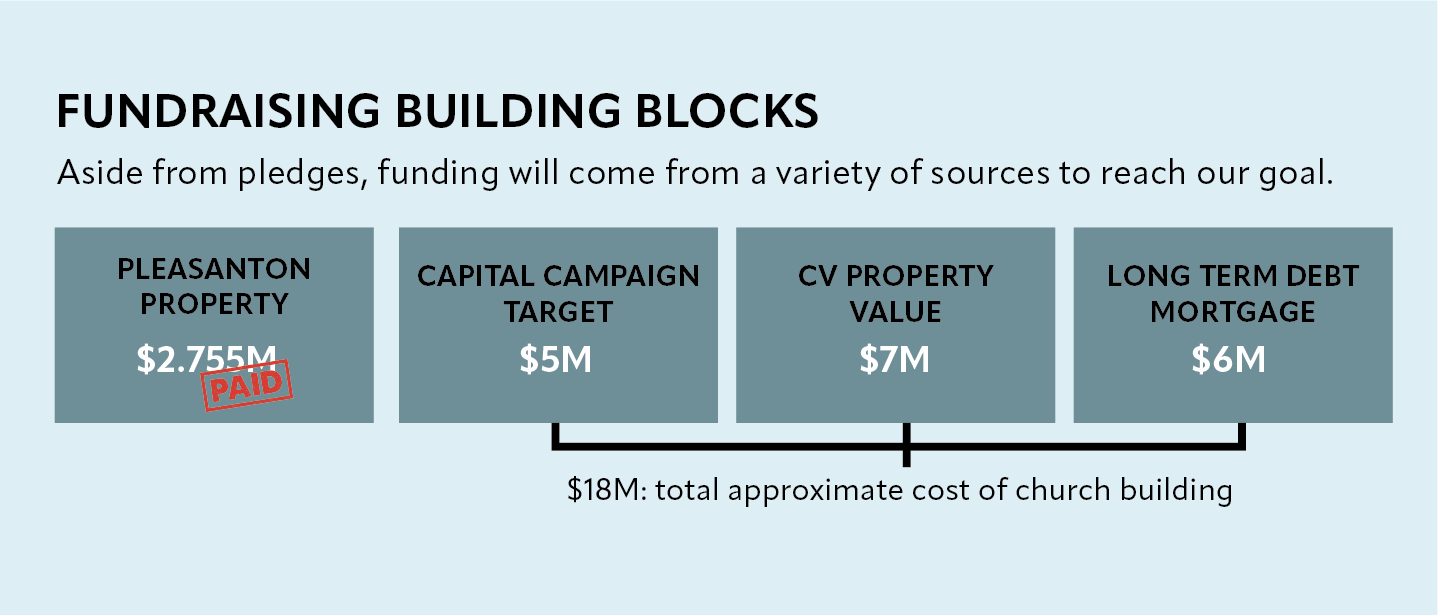
CAPITAL CAMPAIGN TARGET: $5M
Total Pledged: $2.9M
FAQs
Other questions? Sens us an email at
bbocconstruction@resurrectiongoc.com
What is our capital campaign goal?
Our current goal is $5M. The total cost forthe project is $18M. The funds for this will come from various sources: thesale of our Castro Valley property, fundraising from the capital campaign, andlong term debt/mortgage.
Why should I donate now when it may take years to build the church?
Hopefully it will not take years! We have already broken ground on the property, and the goal is for construction to follow very soon. It is important to clarify that a pledge does not mean a handover of committed cash immediately. It is expected that pledges will be made over a period of years based on the abilities of each parishioner. Some will pledge and pay a lump sum immediately or within the same year. Others will pledge and pay over 3, 5 or more years.
Why should I be expected to contribute if I don’t agree with moving the parish?
We give for our future, not for our present and it’s about “we” not about “me”. Consider where our children and grandchildren will be worshiping in the years to come; where weddings and baptisms will take place; where we can grow our ministries and stewardship both in numbers and dollars; where we can reach out to unchurched Orthodox. Demographics have been consistently showing us for the last 20 years that growth will come in the tri-valley, not in Castro Valley. In a democracy such as ours it is inevitable, as well as healthy, to have opposing opinions. In the end, a majority voted to move. It is therefore incumbent on all of us to stand by our leadership and each other to make this move a reality.
If this is so important, why are we increasing our budget spend on new positions?
The budget is our fiscal plan and roadmap for the ongoing operations of the church and community. The capital campaign is for the generation of funds to allow us to achieve our goal of moving the parish. They are related but exclusive of each other. We need to move to grow in the years to come but we also need to have a vibrant community to move. The additional budgetary spend is necessary to help us grow in our present and to maintain/sustain that growth in our future. We cannot sacrifice today for tomorrow, nor will we achieve our long-term goal by solely focusing on today. The challenge for the priest, parish leadership and all of us is to balance the present with the future.
With successive capital campaigns, why even consider a mortgage? Could we afford one?
Capital campaign pledges are made over a period of one to 5 or more years. It is therefore expected that we will have to take out a mortgage for future building stages. Yes, we can afford one. At present, our parish can cover monthly interest and principal payments for a mortgage in excess of $1.5 million. That amount is likely to increase as we continue to build equity. More importantly, however, is that any mortgage will likely be short-lived with successful capital campaigns.